A missed after-hours call can cost a home care agency far more than one conversation. Depending on who was calling, it can mean a lost client worth thousands of dollars over their length of service, a referral source who stops sending cases, a shift that goes uncovered and unbilled, or a worried family who starts looking at other agencies. The only way to know what it costs your agency is to run the numbers with your own bill rate, hours per client, and length of service. This article shows you how.
Why owners underestimate this
If you are like most agency owners, you think about after-hours calls in terms of disruption. Someone’s evening gets interrupted. Someone has to work a call-off at 10 PM. Monday morning starts with cleanup.
All true.
But disruption is the visible cost. The invisible cost is the call nobody answered, because you never see what it would have become. There is no line on the P&L for “family who called Saturday and signed with someone else on Tuesday.”
That is why it pays to measure deliberately.
The four calls that carry real dollars
Not every after-hours call is a revenue call. But four kinds almost always are.
1. The new family inquiry
An adult son finishes dinner, finally sits down, and searches for home care for his father, who just came home from the hospital. It is 8:15 PM. He calls three agencies.
One goes to voicemail. One goes to an operator who takes his number. One reaches someone who asks what happened, listens, collects the details, and tells him exactly when the care coordinator will call in the morning.
Which agency do you think he remembers?
2. The referral source with a case
A discharge planner has a patient going home Saturday. She needs to know today whether you can staff it. If she reaches a live, knowledgeable person, you get the case and you earn a little more of her trust. If she reaches voicemail, she calls the next agency on her list. Do that to her twice and you may drop off her list entirely.
3. The caregiver call-off
A caregiver calls at 9:45 PM to say she cannot make tomorrow’s 7 AM shift. If someone starts working the roster tonight, the shift has a good chance of being covered. If the message sits until the office opens at 8, the visit is probably lost, along with the billable hours and some of the family’s confidence.
4. The current client who wants more, or is about to leave
A daughter calls Sunday evening wanting to add weekend hours. Another calls upset about a caregiver. One is a revenue opportunity. The other is a retention moment. Both are handled very differently by a live person than by a voicemail box.
How to put a number on it
Here is a simple way to estimate what unanswered after-hours calls are worth to your agency. Treat it as a planning exercise, not a forecast, and swap in your real numbers wherever you have them.
Step 1: Know what one client is worth
Multiply your average hourly bill rate by the average hours per week for a new client, then by 4.33 weeks per month. That is monthly revenue per client. Multiply that by your average length of service in months.
For a sense of scale: CareScout’s 2025 Cost of Care Survey put the national median for non-medical in-home care at $35 per hour. That is a national benchmark, not your rate. If you used it with a 20-hour-per-week client, monthly revenue would be about $3,031. At a six-month length of service, that one client is worth about $18,186 in revenue. Your numbers may be higher or lower. The point is that one client is rarely a small number.
Step 2: Estimate the inquiries you lose after hours
Look at how many new inquiries arrive in the evenings and on weekends, and how many of those currently reach voicemail or wait until morning. Then apply your normal conversion rate. If even one additional client per month would have signed with a real conversation, multiply that by your Step 1 number.
Step 3: Count the shifts that go uncovered
How many call-offs come in after hours each month? How many of those shifts are not filled because nobody worked the roster overnight? Multiply the hours lost by your bill rate. That is billable revenue you scheduled, staffed for, and still did not collect.
Step 4: Add what you already spend carrying the phone
On-call stipends, overtime, and the daytime work your team is not doing because they were up handling calls at night. Then think hard about one more number: what it would cost to replace your best scheduler if the on-call rotation drove her out.
What the benchmarks say about inquiries
You do not need industry data to make this case. Your own numbers will do it. But the benchmarks are worth knowing.
Activated Insights’ benchmarking for the 2024 data year put the median cost to acquire a home care client at $845, the highest in six years. The same data showed agencies that tracked every inquiry reported nearly $1 million more in revenue than agencies that did not.
Put those together and the logic is hard to argue with. Inquiries are expensive. Agencies that treat each one as an asset do better. An inquiry that lands in voicemail on a Saturday is acquisition spend you already paid for and then let go.
And speed matters. Research published in Harvard Business Review found that most companies were not responding to new leads nearly fast enough, and that responsiveness had a strong effect on whether a lead turned into a sale. Home care inquiries are often more urgent than a typical sales lead, because there is usually a hospital discharge, a fall, or an exhausted family caregiver behind them.
The costs that do not show up in the math
Some of the most expensive after-hours misses are hard to put a number on.
- Reputation with referral sources. Discharge planners and care managers talk to each other. Being reachable becomes part of how you are described.
- First impressions with families. A recording at 8 PM tells a frightened family something about how you will treat them when something goes wrong.
- Client confidence. A family who cannot reach anyone during a small concern starts to wonder what happens during a big one.
- Staff retention. The person carrying the phone is usually someone you cannot afford to lose. Caregiver turnover ran at 75% in the 2024 benchmarking data, and the office team that keeps replacing those caregivers is under the same strain.
What “answered” should actually mean
Here is the trap: an answered call is not automatically a saved call.
If the person who answers can only take a name and number, you have improved the experience slightly and solved very little. The family still waits until morning. The call-off still is not worked overnight. The discharge planner still does not get her answer.
For a home care agency, a call is truly answered when the person on the line can:
- Speak for your agency, by name, with real knowledge of how you work
- Collect the intake details your team needs and give the family a clear next step
- Start working a call-off inside your replacement protocol
- Separate routine issues from urgent ones and escalate the right way
- Document everything for your morning team in a consistent format
That is the difference between message-taking and live call coverage.
A quick gut check
Answer these honestly:
- Do you know how many after-hours calls your agency received last month?
- Do you know how many were new inquiries?
- Do you know how many call-offs were covered overnight versus in the morning?
- Could you say, today, what one lost inquiry costs you?
If any of those answers is “not really,” that is your starting point. You cannot manage a leak you have not measured.
Go deeper with the free guide
The Home Care Agency Guide to 24/7 Live Call Coverage walks you through all of this in more detail, including:
- The full Missed Call Revenue Worksheet, with every step laid out
- Five places revenue leaks after hours
- What a strong after-hours inquiry call sounds like
- A 12-question Live Call Coverage Readiness Check
- A side-by-side comparison of every after-hours coverage model
- A 30-day rollout checklist
Download the Free Guide: https://www.247coastalcontact.com/live-call-coverage-guide/
| Want help finding your own numbers?
Request Your Free After-Hours Workflow Review and our team will walk through how your agency handles calls after hours today and where revenue may be slipping. Call (251) 260-0226 |
Want to understand how a dedicated team works day to day? Read about our after-hours on-call support for home care agencies.
24/7 Coastal Contact provides dedicated after-hours on-call coverage for home care and home health agencies nationwide.
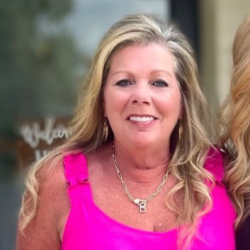
Prior to establishing 24/7 Coastal Contact, Ms. King worked for 30 years in the health care industry. Her experience began providing direct patient care. Eventually, she transitioned into home care and home infusion, then acquired her HCS-D certification as a Home Health specialty coder where she learned about the administrative burden facing Home Health and Home Care providers.
It became clear that after-hours customer service was a major toll home care industry and it was with this need in mind that 24/7 Coastal Contact was founded. Since 2018, 24/7 Coastal Contact has grown explosively. Now, we provide service to over 40 agencies in over 24 states with a 95% retention of service rate.
- What Does a Missed After-Hours Call Cost a Home Care Agency? - November 6, 2026
- What Does After-Hours Coverage Really Cost Your Home Care Agency? - October 26, 2026
- Building an After-Hours Escalation and Documentation Process for Home Care - October 21, 2026